What AI-native means · AIOS
Four steps to becoming AI-native.
Start with occasional use. Experiment on real tasks. Build repeatable workflows. Then organize the work around AI, with people responsible for the result.
Start with how you work today.
- 01Tourist
Try an occasional task
- 02Experimenter
Test on real work
- 03Operator
Make it repeatable
- 04AI Native
Organize work around AI
Four steps to becoming AI-nativeThe four steps are explained below.
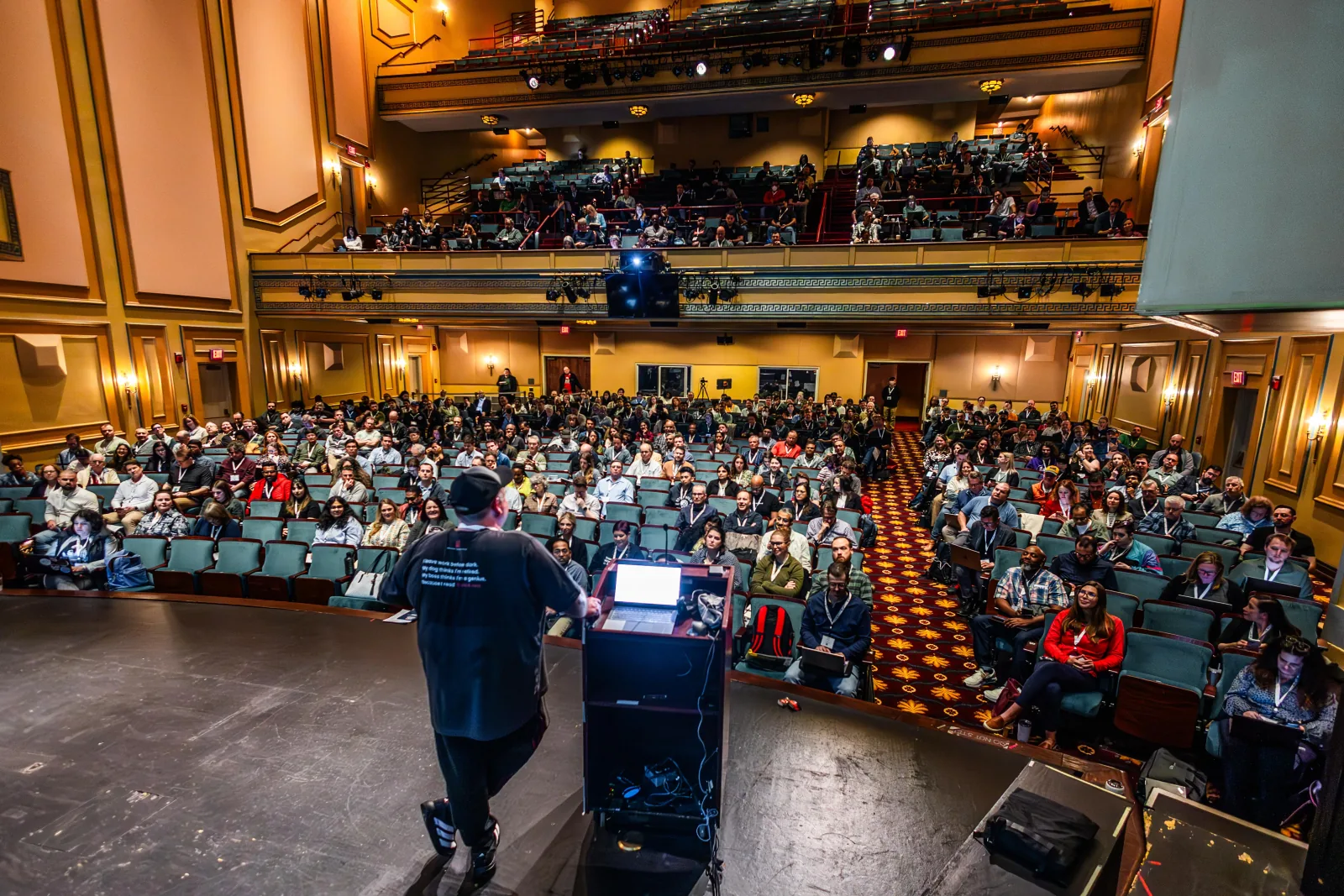
A full house at the Carolina Theatre · All Things Open AI 2025See the event
Definition
Being AI-native means organizing your work so AI can use the right information, follow repeatable instructions, and produce results you can check. People set the standards, review consequential decisions, and save useful knowledge for the next task. AIOS uses three questions to assess that progress: can AI find the context, meet your standard, and retain what will help next time?
The AI-native threshold
A useful chat is a starting point. To make AI part of a recurring task, decide where it gets information, what it should produce, who checks the result, and what you should save for next time. Those decisions turn an experiment into a process your team can use.
The AI-Native Test (three questions)
Can an agent find the context it needs? Can it produce work that meets your standard? Can you retain the useful knowledge for next time? Apply those questions to a specific workflow. A no gives you something concrete to improve; a yes should be supported by work you've checked.
The maturity ladder: Tourist → Experimenter → Operator → AI Native
Tourists try AI occasionally. Experimenters use it on real tasks. Operators build repeatable workflows with clear checks. At the AI Native stage, people organize work around those capabilities and keep improving them. Use the four stages to choose your next step, then measure the results on your own tasks.
Make room for work you haven't been able to do
Saving time matters. So does what you do with it. Look at the research, customer follow-up, or product idea you keep putting off. Test whether AI makes that work practical, including the time needed to prepare inputs and review the result.
Two ways to miss the useful work
Buying access to an AI tool doesn't tell anyone how to use it well. Assuming it can replace a whole job also skips the details. Break the work into tasks, identify what AI can help with, and decide where experience and human review are still needed.
95%
of enterprise gen-AI pilots show no measurable P&L impact
MIT Project NANDA
~6%
of organizations qualify as AI high performers
McKinsey, 2025
Questions & Answers
What It Means to Be AI-Native: FAQ
What does it mean to be AI-native?
Being AI-native means organizing your work so AI can use the right information, follow repeatable instructions, and produce results you can check. People set the standards and remain responsible for the work. Useful knowledge and instructions are saved for the next task.
What is the difference between AI-assisted and AI-native?
AI-assisted work uses AI for individual tasks, such as drafting an email. AI-native work builds it into a repeatable process with shared context, instructions, review, and clear responsibility. Both can be useful; the distinction describes how the work is organized, not a guaranteed performance gain.
What is the difference between AI-native and agent-native?
AI-native describes a company, team, or person whose work is organized around AI. Agent-native describes software that AI agents can discover, understand, operate safely, and verify. AIOS measures the first with its maturity model and three-question test; the Agent Native product scorecard evaluates the second.
What should I check when an AI pilot isn't useful?
Look at the whole task: whether the inputs are reliable, the tool fits the job, the instructions are clear, and someone can review the output. Measure preparation, corrections, and review alongside the time AI saves. A fast draft is useful only if you can turn it into acceptable work.
What are the stages of AI maturity?
The AIOS maturity ladder has four stages: Tourist (occasional use), Experimenter (trying real tasks), Operator (repeatable workflows with clear checks), and AI Native (organizing work around AI and improving those processes). Individuals and teams can use it to decide what to practice next.
The manual is free
Get AIOS and follow along as I update it.
Subscribe to The AI Enterprise to get the free AIOS book in EPUB and PDF formats through BookFunnel. I’ll share edition updates and practical lessons in the newsletter.
Free. No credit card. Includes The AI Enterprise newsletter. Your download is yours to keep, and you can unsubscribe anytime.