The Four Signals · AIOS
Keep human judgment in the workflow.
People need to see what AI is doing, have a say, stop it when needed, and learn from the result. The Four Signals make those responsibilities visible.
and who checks the result.
- 01
Warning
Make the decision visible
- 02
Voice
Give people a say
- 03
Veto
Keep a way to stop
- 04
Learning
Improve from the result
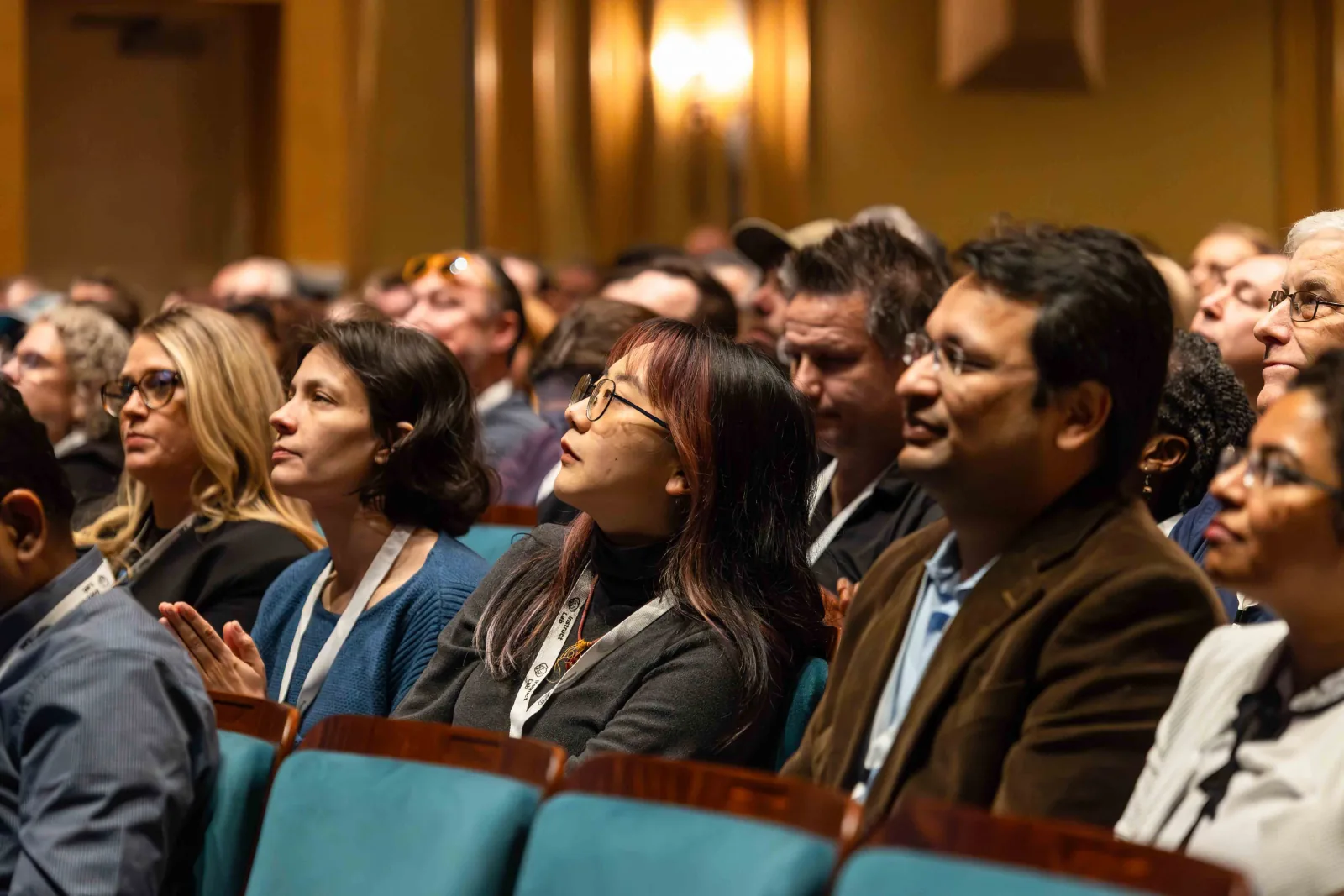
The connecting line explains the model; it does not map the pictured attendees or their tools.
In the audience · Carolina Theatre · All Things Open AI 2025See the event
The one idea
The people doing the work know things an AI system may miss. They need a way to contribute that knowledge, question a decision, and stop an action that could cause harm. The Human Signal explores how to give them that authority.
The framework
The Four Signals
Each signal pairs a principle with a practical test. Use the questions below to check whether people can exercise that authority.
Warning Signal
Transparency“You cannot govern what you cannot see.”
People need to see the information and rules behind a decision before it takes effect, so they can question it.
The test
Can a worker ask “why did the system decide that?” and get a reason they can challenge — not a confidence score?
Voice Signal
Participation“The people who do the work know things the model does not.”
People who do the work need a way to contribute their knowledge while a decision is being made.
The test
When someone with experience says “this is wrong,” does the system have a place for them to say it, and a reason it has to listen?
Veto Signal
Accountability“You are not accountable if no one can stop you.”
The power to halt a decision — and the requirement that overriding that halt be done in the open, by a named person, with a recorded reason.
The test
Can a person stop a harmful decision, and if they are overruled, does the override leave a signature?
Learning Signal
Adaptation“A system that cannot be corrected will repeat its mistakes at scale.”
Use challenges, stopped decisions, and failures to improve the system and its rules. People who report a problem need protection from retaliation.
The test
When a human catches an error, does the system improve — and is the person who caught it safe for having said so?
The four signals are: warn, voice, veto, learn.
“A system that hears one signal is a dashboard. A system that hears all four is a partnership.”
— The Human Signal
The complete system
The Operating Model — seven layers
The Four Signals work alongside six other layers that cover risks, design, operation, security, staffing, and ongoing review.
Threat
Know what you're defending againstLook for risks to the information the system receives, the knowledge it stores, and the identities it trusts. An attacker may also mislead people into granting access or accepting bad information.
Build
Build it so it can be governedThe book proposes three design choices: retain control of the model your business depends on, give people authority over consequential decisions, and protect the system's stated purpose so a future owner cannot quietly remove it.
Operate
Move the knowledgeFind the knowledge people have, make it available to the system, give them authority to stop an action, use their corrections to improve the system, and help them take on work that needs their judgment.
Govern
The Four SignalsKeep all Four Signals in use after launch: people can inspect decisions, contribute knowledge, stop harmful actions, and correct mistakes.
Secure
Make the signals trustworthyThe book combines three controls: models you can retrain, confidential computing to protect data during processing, and records of where inputs came from so they can be checked before use.
Fund
Governance is a set of jobsAssign people and time to Warning, Voice, Veto, and Learning. Keep a record of warnings, who reviewed them, and what was decided.
Sustain
Govern the governorsShare oversight across a staffed rotation with time set aside for the work. Review the oversight process too: look for overreliance on AI and update rules that people can bypass.
Questions & Answers
The Four Signals: FAQ
What are the Four Signals?
The Four Signals are a governance framework from The Human Signal: Warning (Transparency), Voice (Participation), Veto (Accountability), and Learning (Adaptation). They describe how people understand decisions, contribute knowledge, stop harmful actions, and correct mistakes in automated systems.
What is the Human Signal operating model?
It describes AI governance in seven connected layers: Threat (identify risks), Build (retain control and human oversight), Operate (use people's knowledge), Govern (the Four Signals), Secure (protect models, data, and inputs), Fund (assign people and time), and Sustain (review the oversight process).
What is human-in-the-loop AI governance?
It means giving a named person responsibility and authority to review or stop a decision that could harm someone. In the Four Signals, this is the Veto: a person can halt a decision, and anyone overriding that halt must be named and record the reason.
How do you make AI accountable?
Give a person the authority to stop a harmful decision. Under the Veto Signal, anyone who overrides that stop must be named and record the reason so the decision can be reviewed.
How does AI governance relate to becoming AI-native?
When you organize work around AI, people still need authority to direct it and check the results. The Four Signals explain how to keep that authority in practice. They complement AIOS's guidance on agents, workflows, and company knowledge.
What is The Human Signal?
The Human Signal is a business-fiction novel by Mark R. Hinkle, in the tradition of The Goal and The Phoenix Project. It explores how people can have a say in the AI systems that affect them. Its frameworks are intended to help readers discuss those decisions in their own organizations.
Governance through story
Read the story behind the framework
The Human Signal uses a story to explore the decisions people face when AI changes their work. It is business fiction in the tradition of The Goal and The Phoenix Project.
Read The Human SignalThe manual is free
Build the AI-native operating model
The Four Signals are the governance layer. Subscribe to The AI Enterprise for the current AIOS edition through BookFunnel plus AIOS edition notes and practical operating guidance.
Free. No credit card. Includes The AI Enterprise newsletter. Your download is yours to keep, and you can unsubscribe anytime.